Office Design
SCHWARZFLIX STUDIO
A hospitality interior concept translating migration, cultural memory, and belonging into a cohesive dining experience through spatial sequencing, material expression, and atmospheric design.
LOCATION :
1415 W Wisconsin AVE, Milwaukee, WI
SIZE :
14,000 Sq.Ft.
Client :
Hilary Schwartz
Gloria felxi
Ruaida Mannaa
Project Duration :
10 weeks
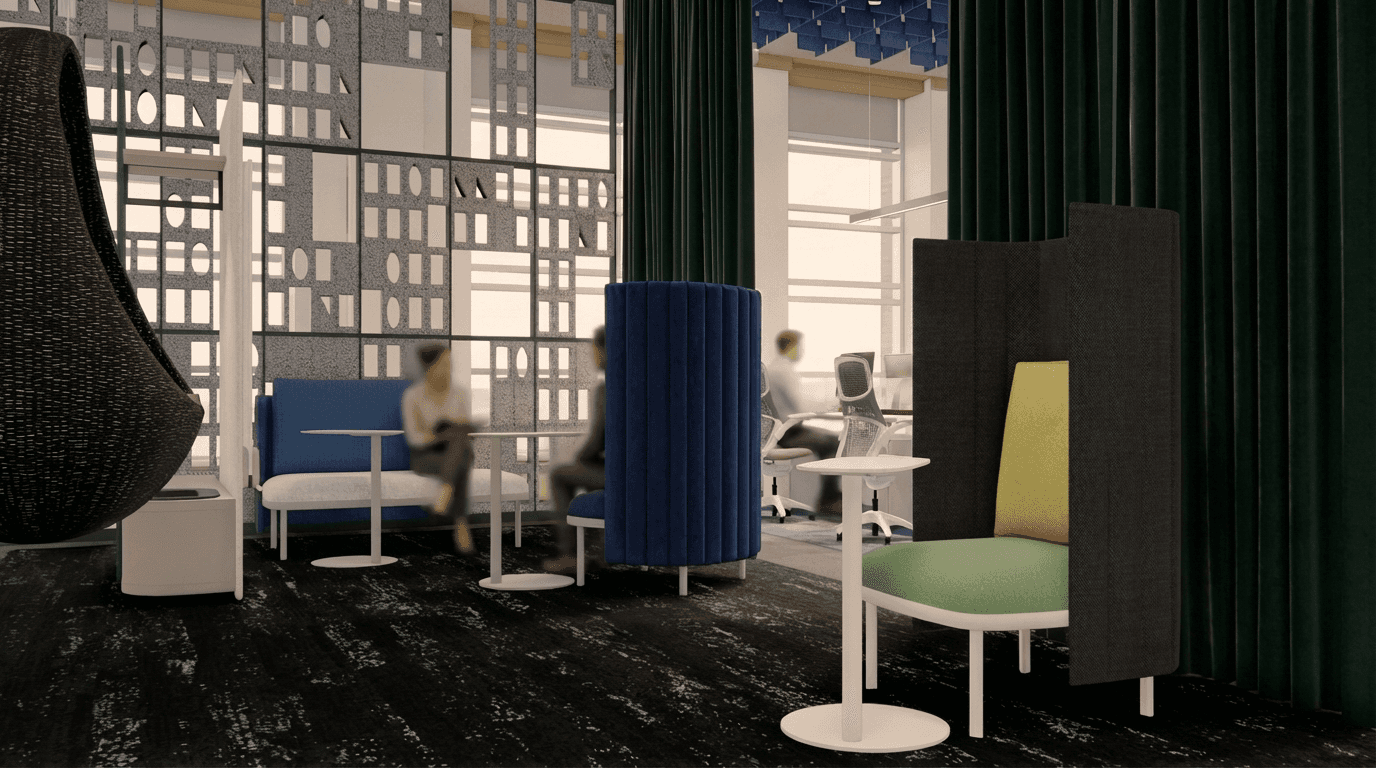
CONCEPT : Woven Boundaries
Woven Boundaries frames the studio as a layered environment for focus, movement, and collaboration. Semi-transparent and acoustic boundaries balance openness with privacy, supporting a neuroinclusive workplace for illustration and animation teams. Shared critique nodes, focused work areas, and sensory recovery spaces create choice, clarity, and comfort throughout the studio.
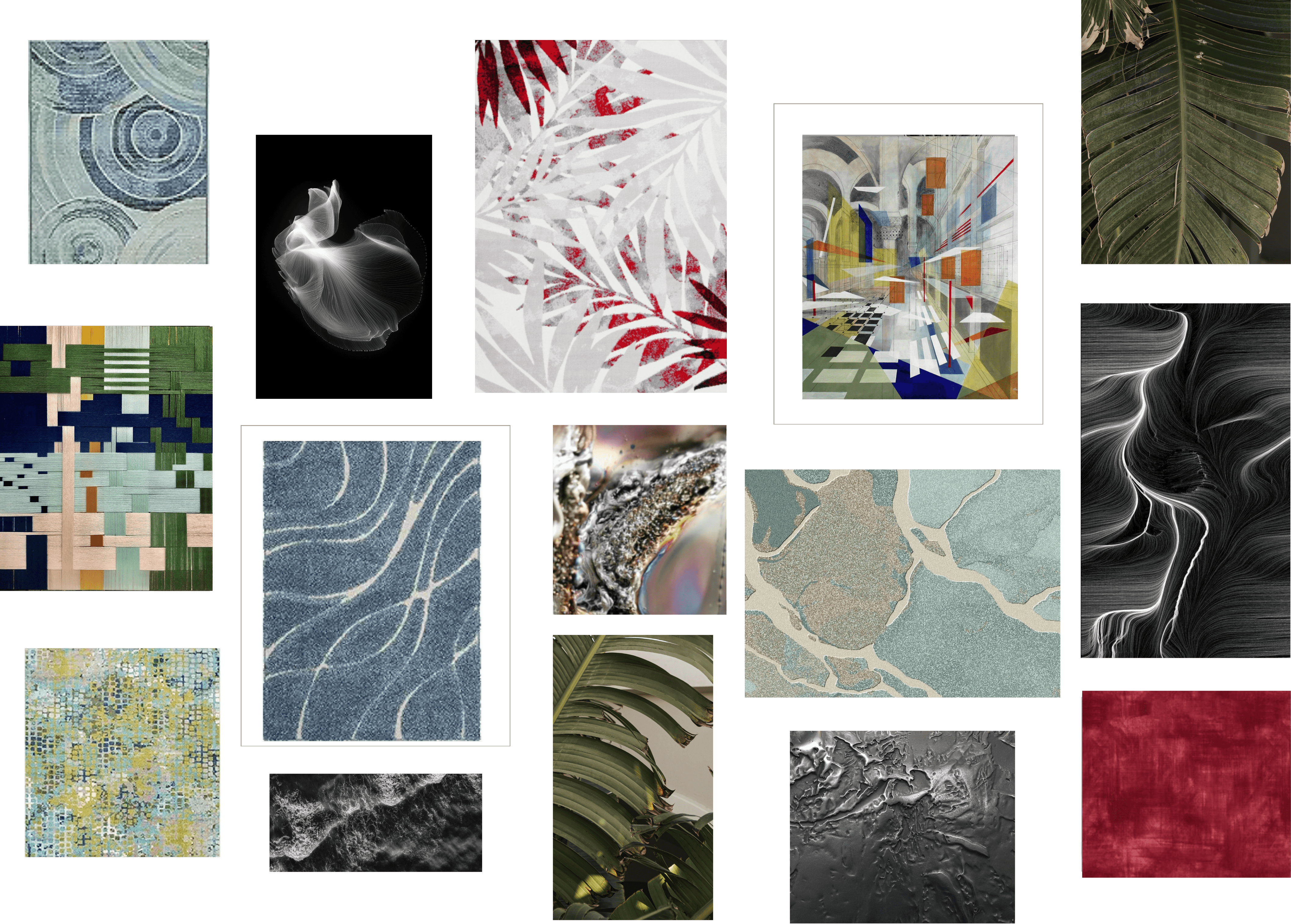
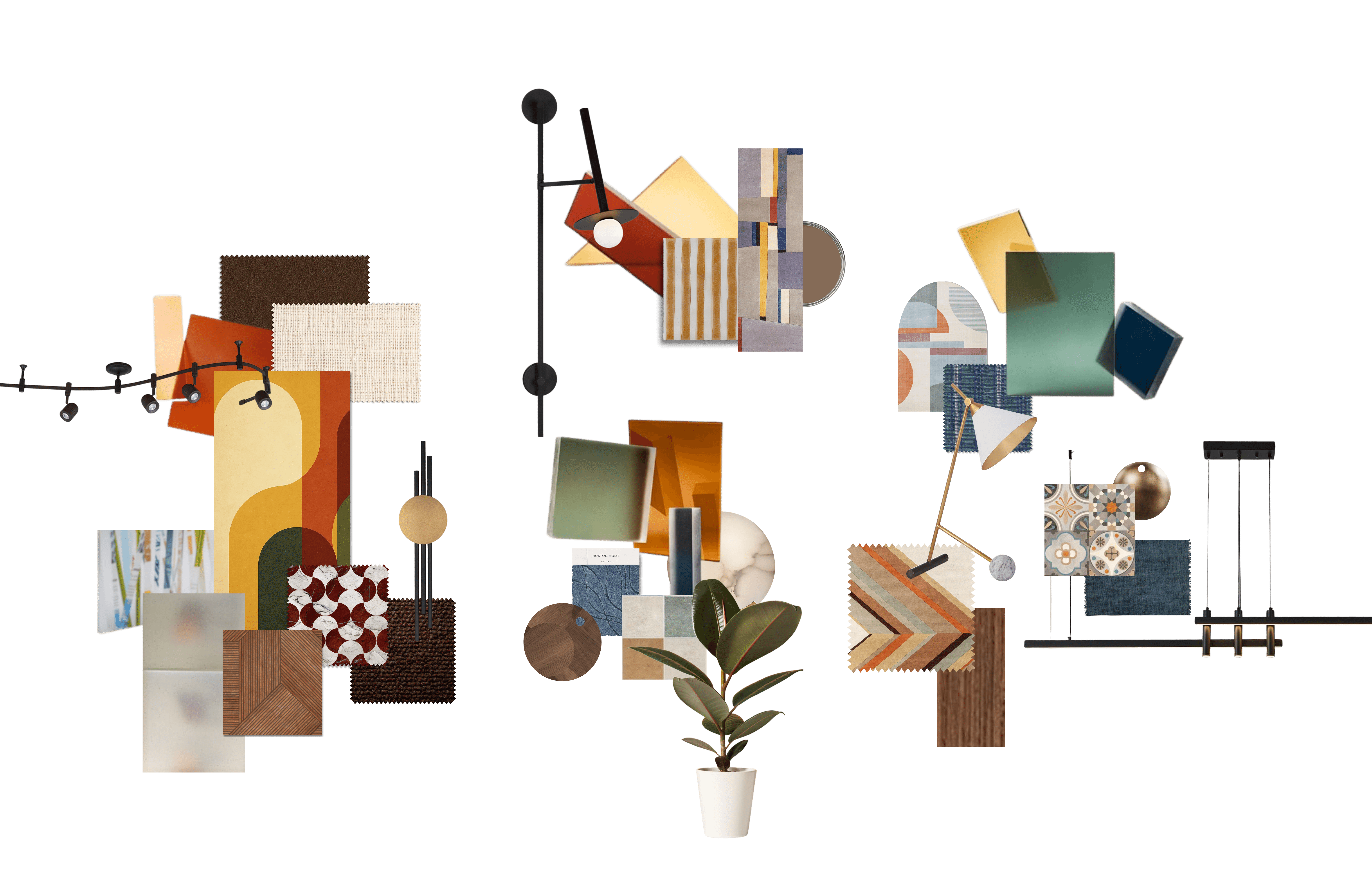
material board
Design Challenges
This project was shaped by several key constraints within the Marquette University building:
· A low 9-foot ceiling at the mezzanine and a second floor that is not truly open to below
· Uneven natural light distribution across the studio
· The need to maintain clear and efficient campus circulation routes
· The challenge of integrating a multisensory room within the overall plan
· Bird-collision prevention along large glazed areas
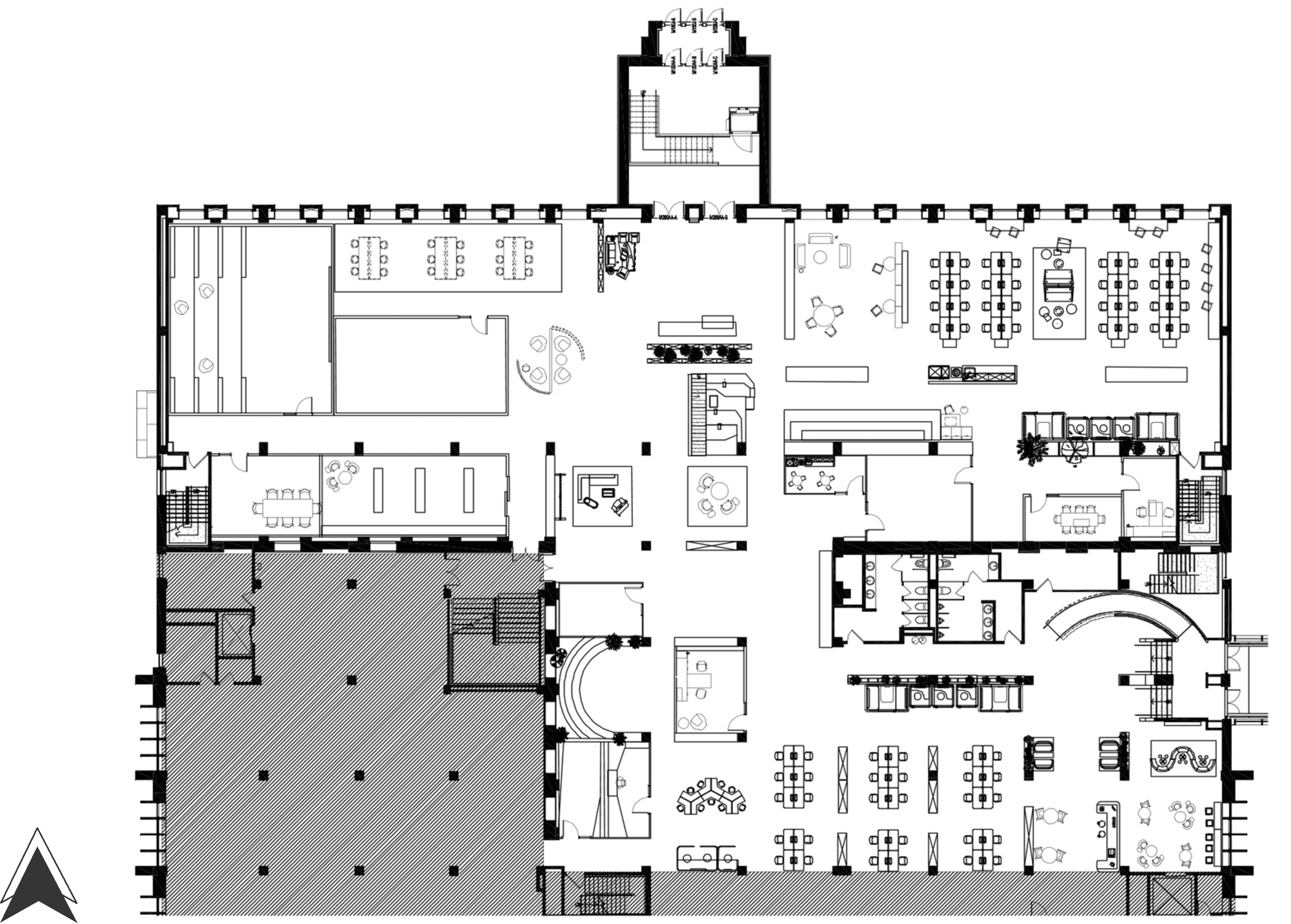
Level 2 FLOOR PLAN
The first floor serves as the studio’s main collaborative zone, combining open workstations, critique areas, meeting rooms, and support spaces. Shared nodes connect animation and illustration teams while sensory rooms and enclosed focus areas provide quieter options for neuroinclusive working styles.
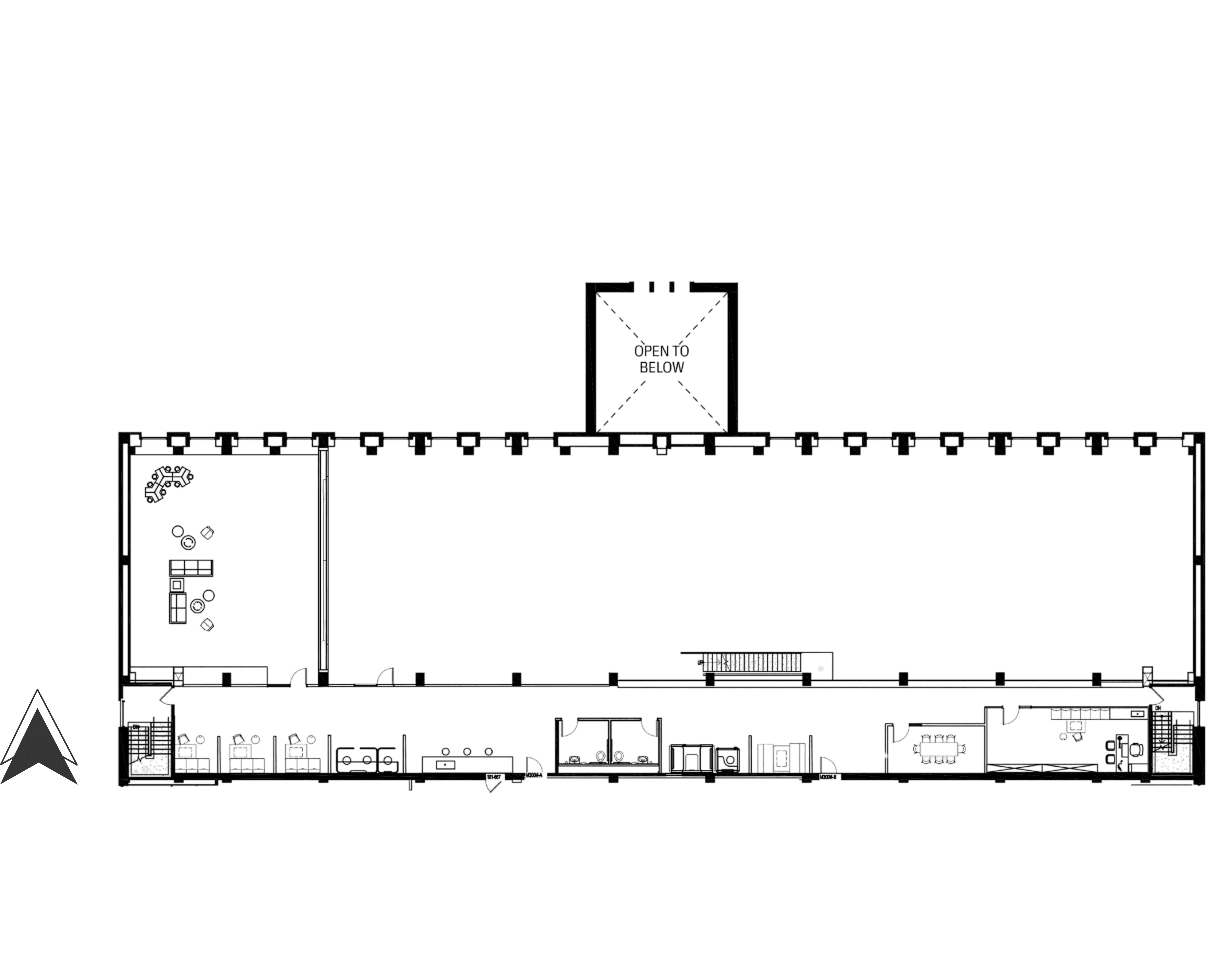
Floor Plan of the Mezzanine
The Mezzanine offers a quieter layer for focused work, small-group use, and flexible programming. Overlooking the open volume below, it helps balance collaboration with privacy, recovery, and concentration.
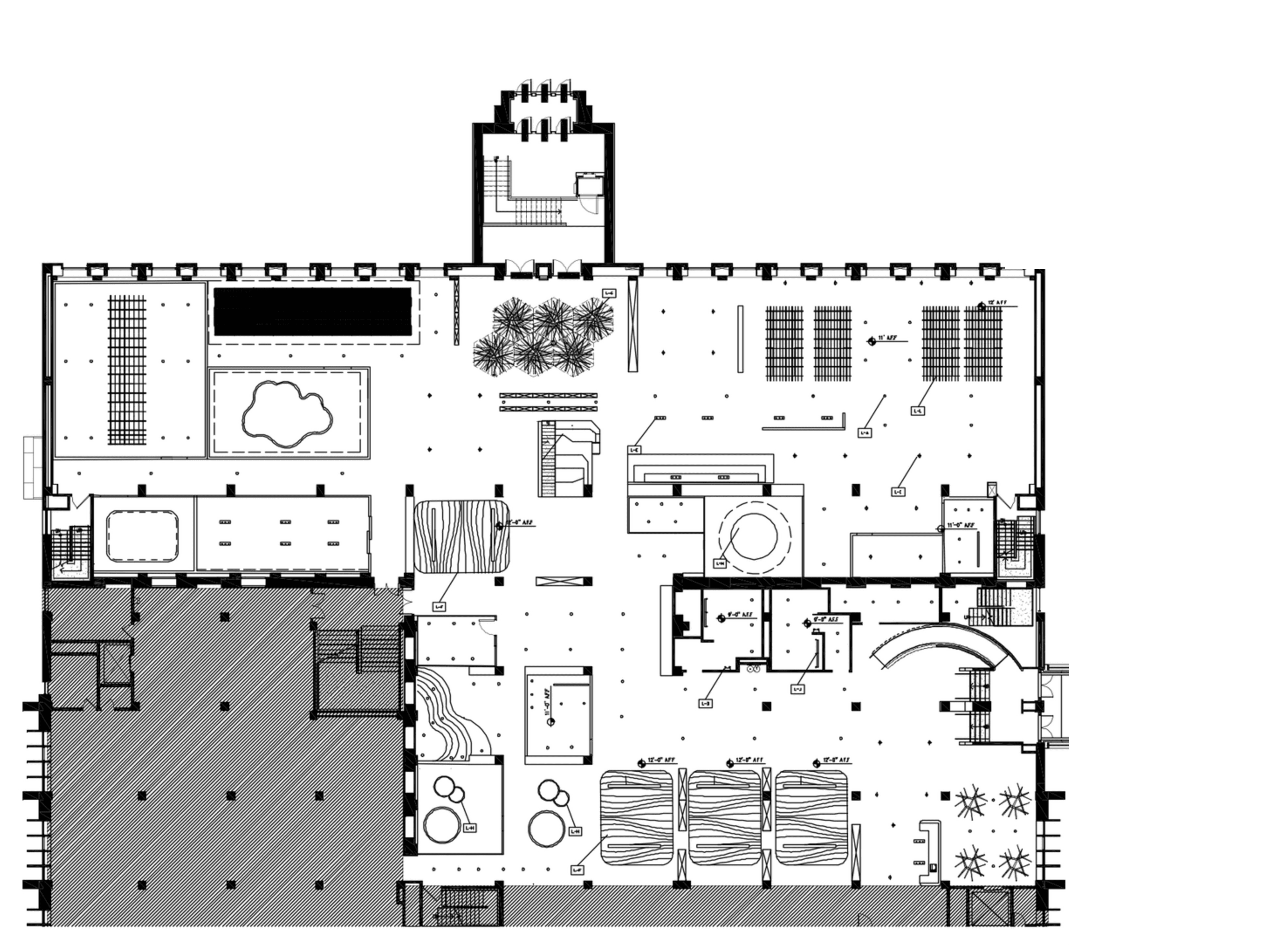
Level 2 CEILING PLAN
The first-floor ceiling plan uses lighting, acoustic treatment, and ceiling variation to define collaboration, circulation, and focus zones. Open areas remain visually connected, while enclosed rooms provide greater sensory control and acoustic comfort for a neuroinclusive studio environment.
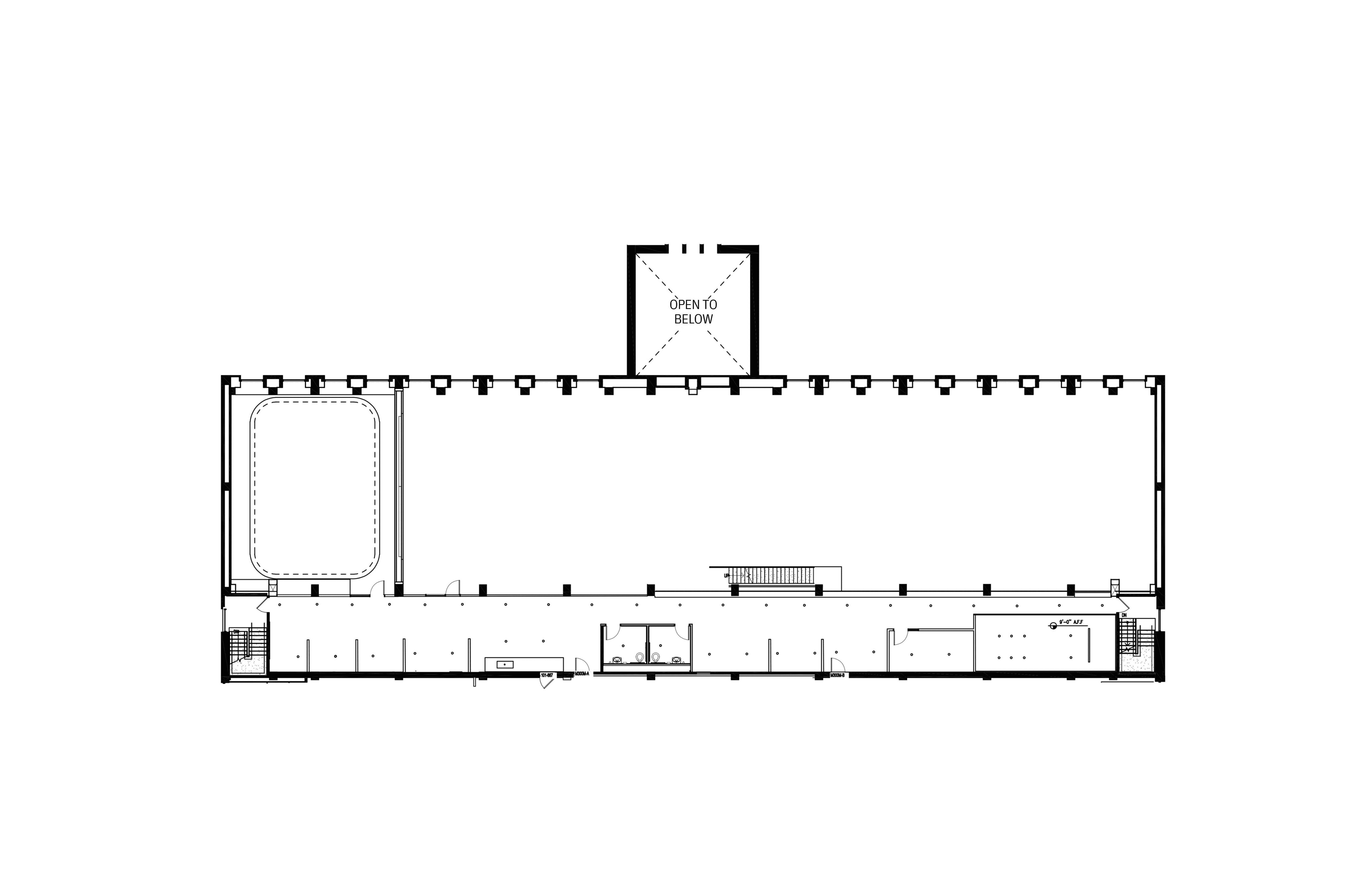
Mezzanine
The mezzanine ceiling plan responds to the lower 9-foot ceiling height with a simpler and more controlled overhead strategy. Even illumination and restrained ceiling treatment help create a quieter atmosphere for focused work, smaller group use, and reduced sensory load.
Monumental Stair
The monumental stair acts as a central node for movement, visibility, and informal gathering, linking both levels through a clear shared destination.

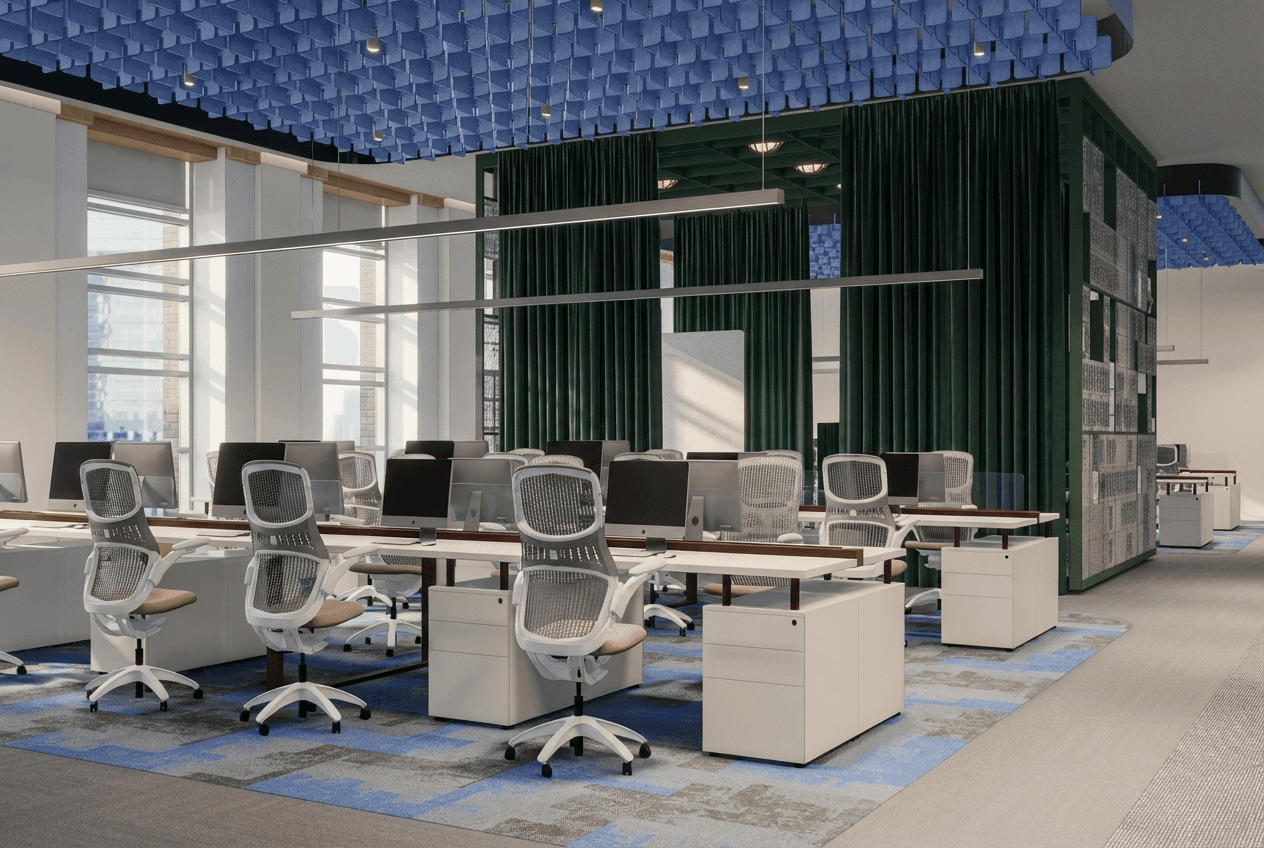
Illustration Workstations
The illustration workspace is planned to support concentration through spatial clarity, ergonomic comfort, and acoustic moderation. Given the strong natural daylight in this area, the material and color palette is intentionally restrained to maintain visual balance rather than introduce unnecessary stimulation. Carpet tile flooring enhances sound absorption and helps establish a quieter, more focused work setting.
Wellbeing Room
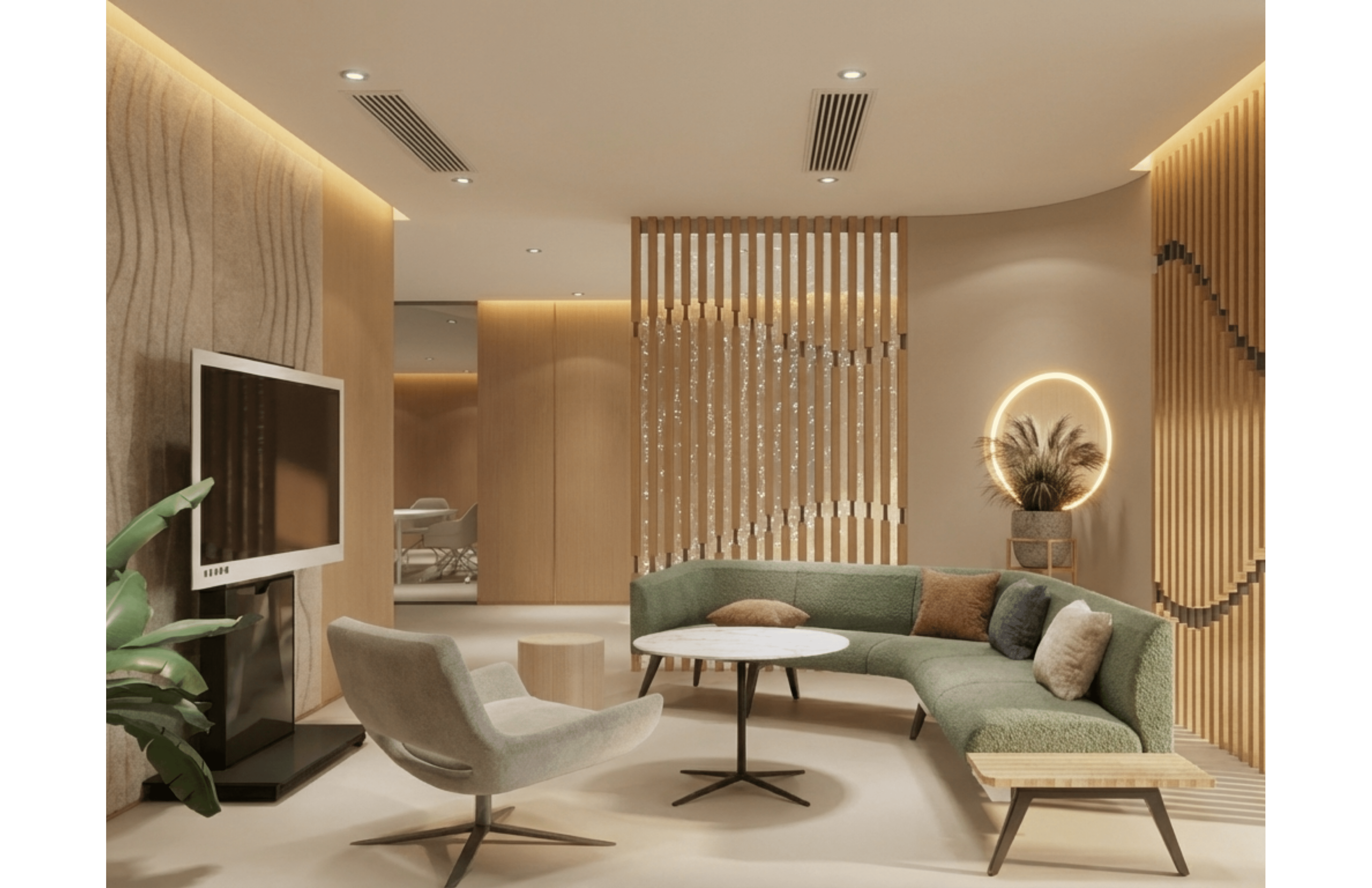
This wellbeing room provides a quiet, low-stimulation space for rest, emotional regulation, and sensory recovery. Warm wood finishes, soft lighting, and comfortable residential seating help create a calm atmosphere that supports neuroinclusive well-being within the workplace.
Tiered Stair Lounge
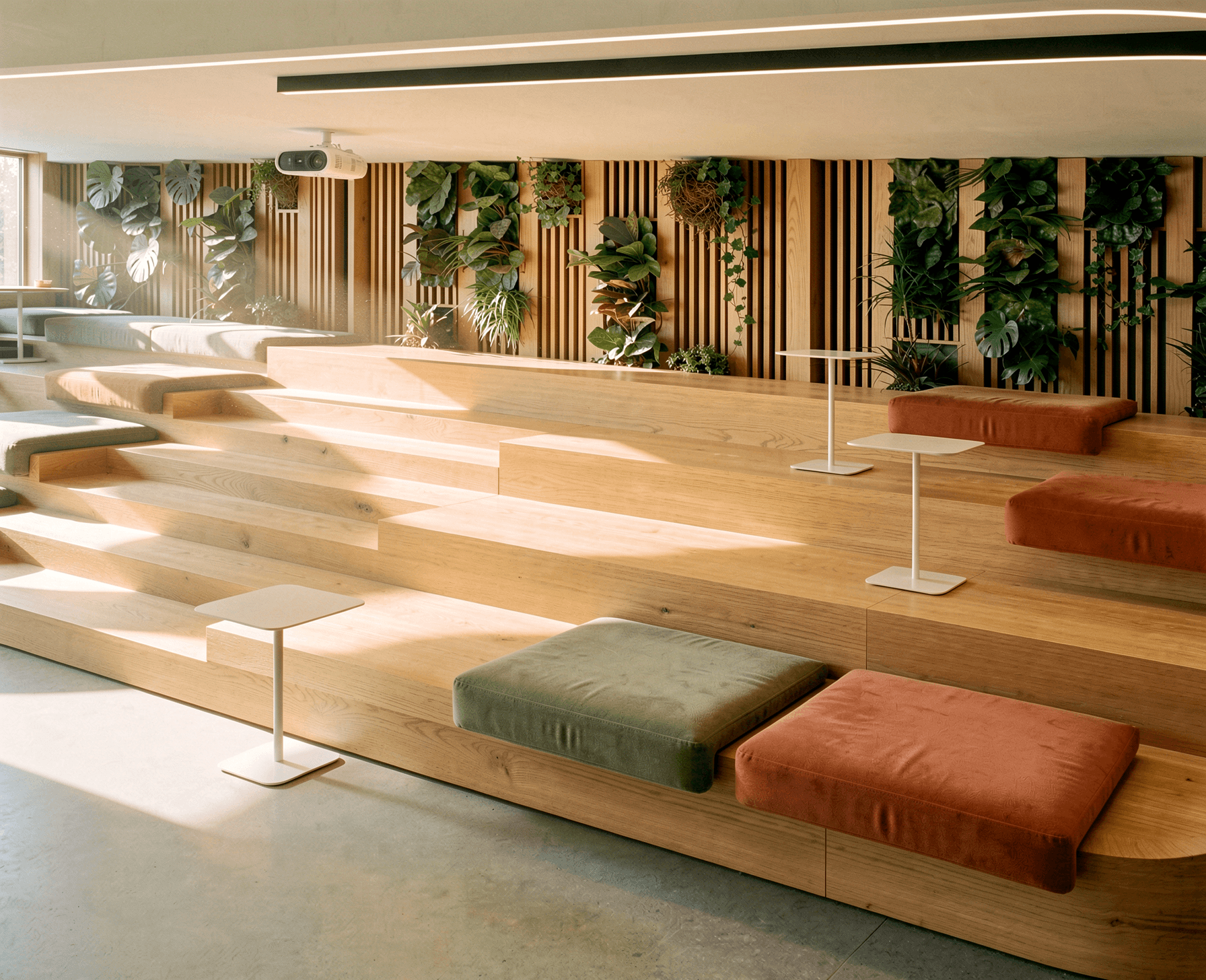
The tiered stair is designed as a multi-use zone for pause, gathering, and low-pressure collaboration. Its layered seating supports neurodiverse users by offering spatial choice, clearer personal boundaries, and different levels of engagement. Warm wood, planting, and cushioned surfaces soften the sensory environment, demonstrating how interior design can actively support focus, regulation, and comfort.
Animation Workspace
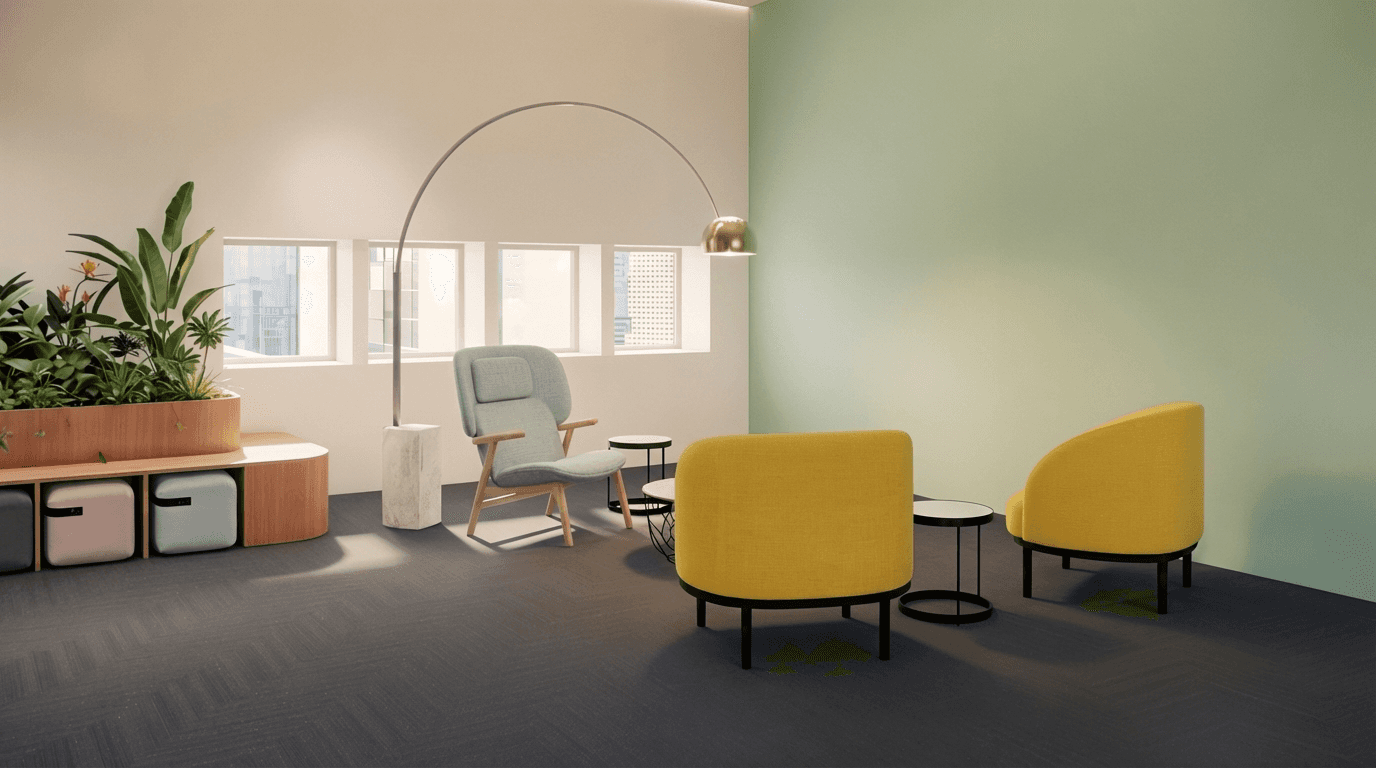
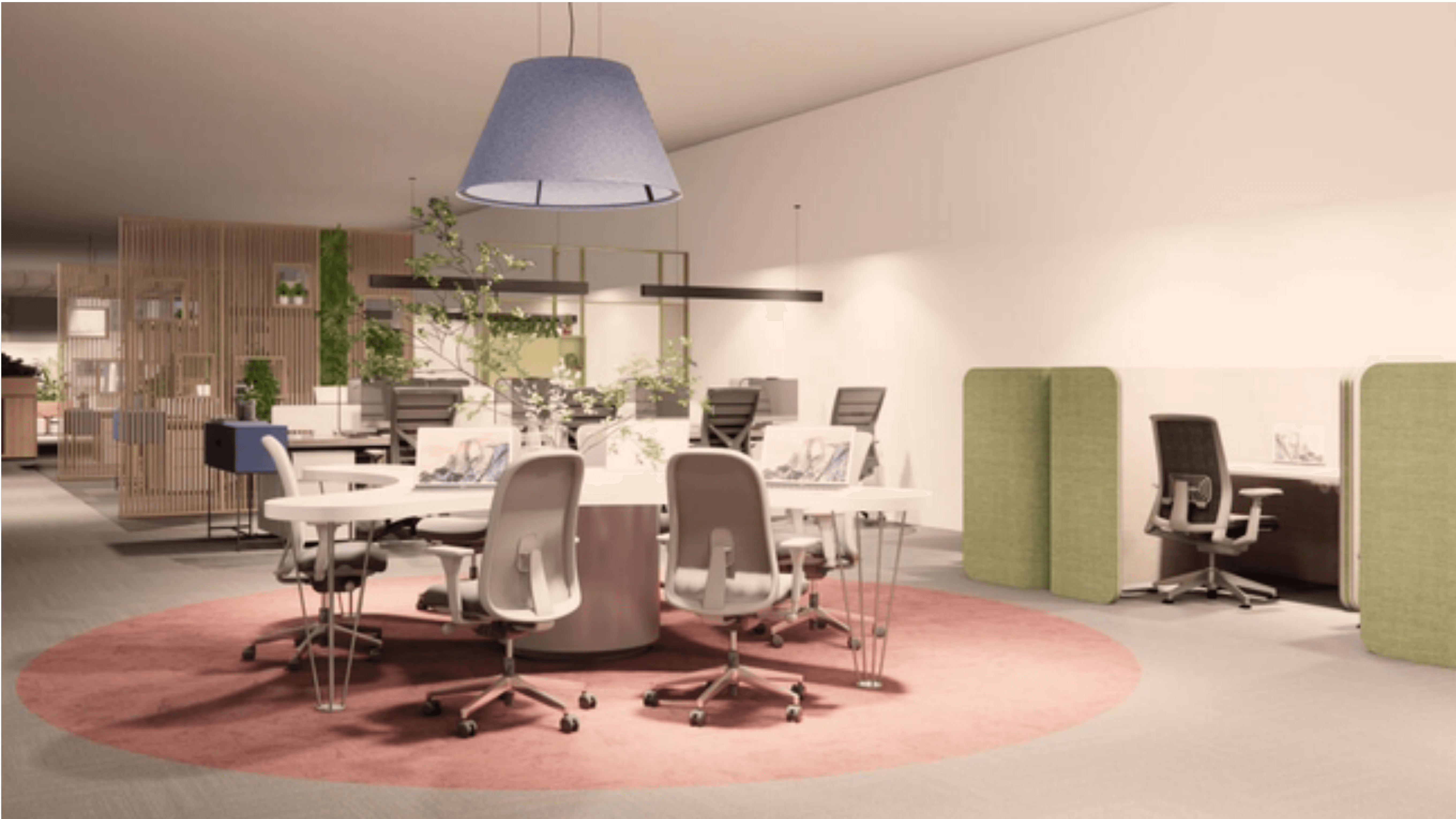
Designed for both collaboration and regulation, the animation workspace combines open team areas, semi-open workstations, and quieter lounge settings to support different working styles. Acoustic softening, filtered boundaries, and calming material choices help create a more neuroinclusive environment for focus, communication, and sensory comfort.

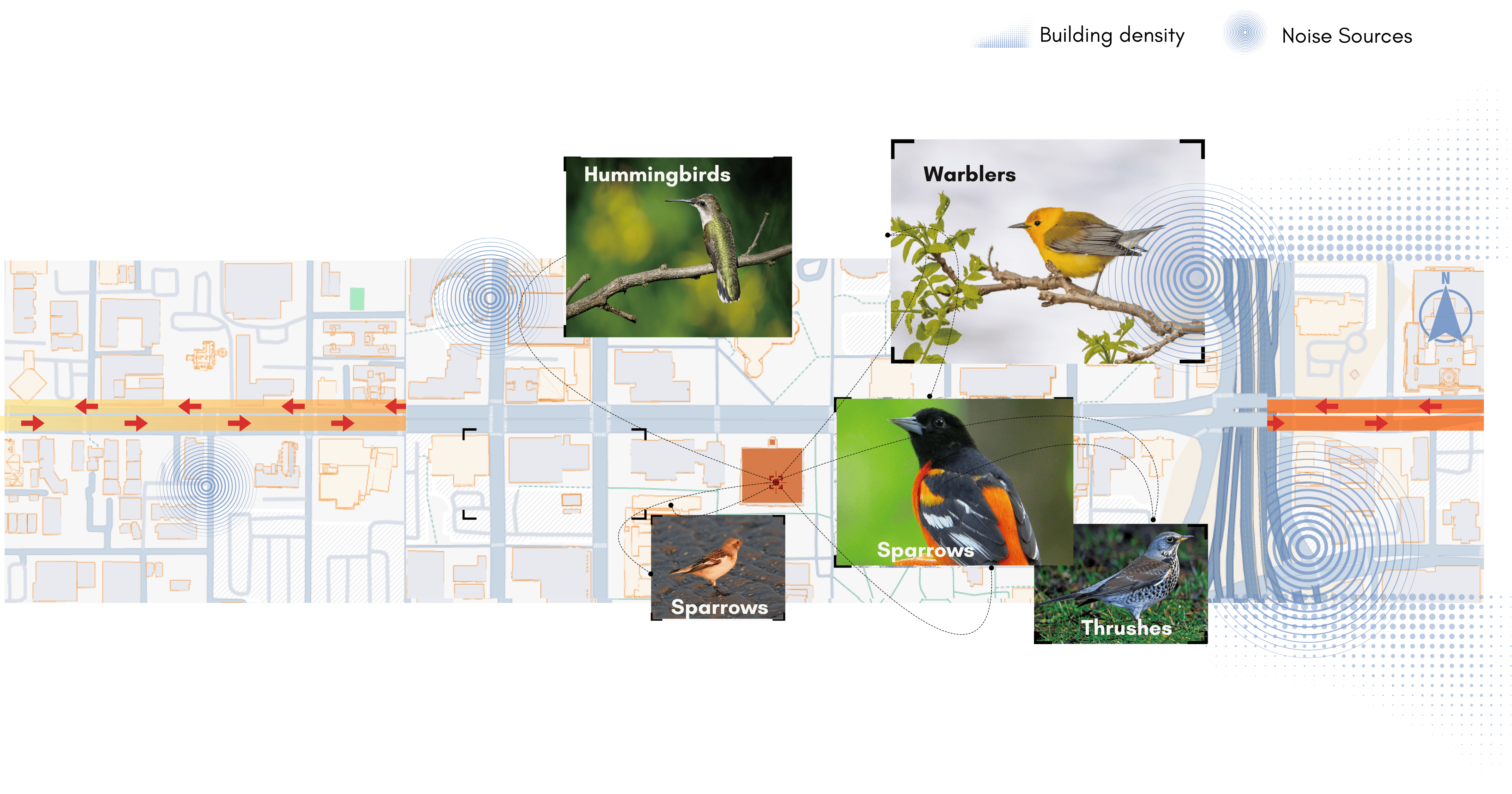
BIRD–GLASS COLLISION
In the U.S., 365–988 million birds are killed every year by collisions with building glass (median 599 million).
Milwaukee is near Lake Michigan and sits on major migration routes, so many birds pass through in spring and fall.
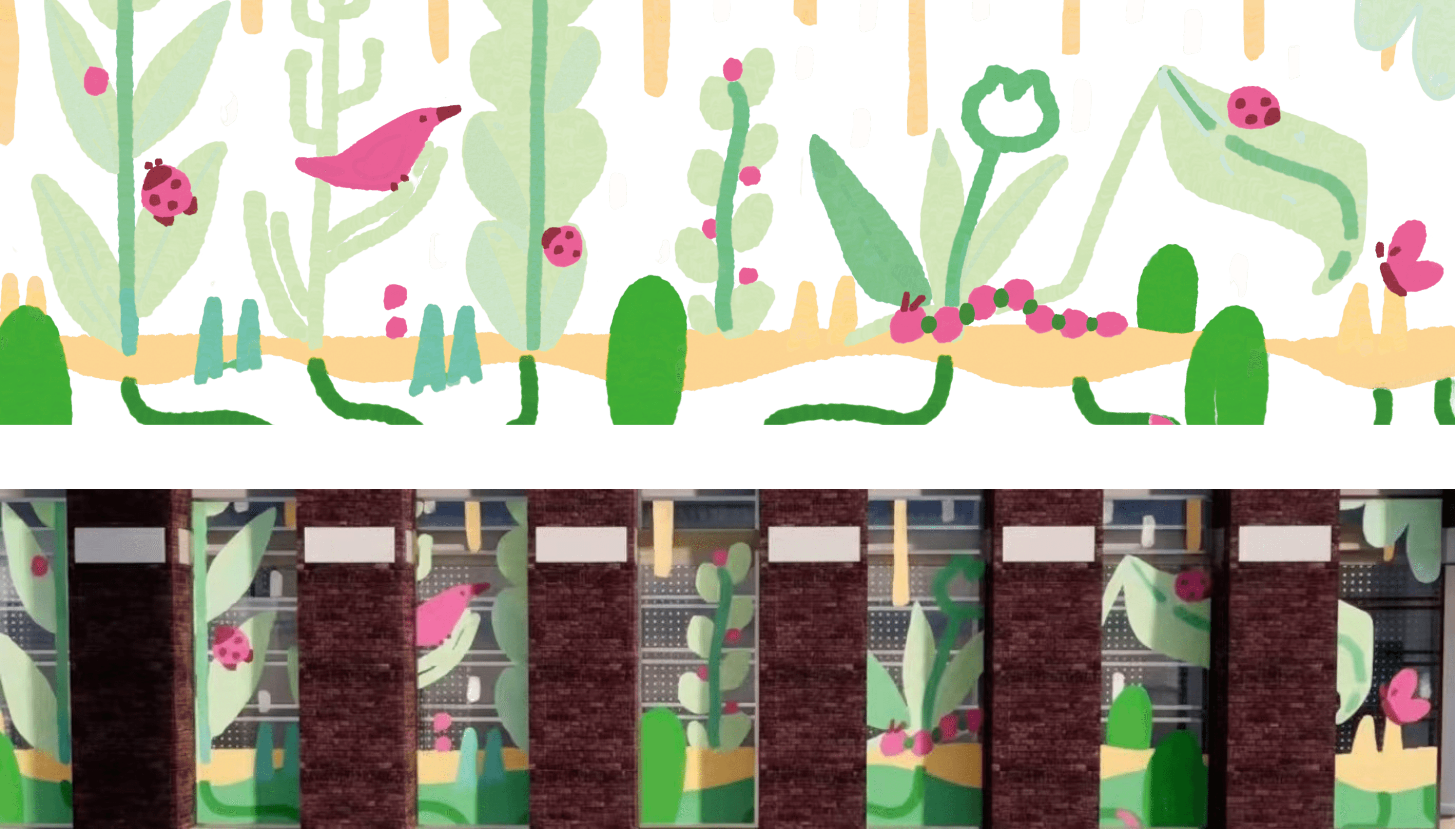
BIRD-SAFE WINDOW DECALS design
Reflection
This project taught me that neuroinclusive design requires more than adding separate support spaces—it depends on how the entire environment is organized, experienced, and understood. Revisiting the plan, circulation, ceiling strategy, and material decisions helped me shape the studio into a more balanced workplace that supports both creative collaboration and sensory comfort.
Key takeaways:
Research should inform both conceptual and technical decisions
Neurodiverse needs must be considered through the whole spatial experience, not just isolated rooms
Lighting, acoustics, and material choices play a major role in comfort, focus, and regulation
Clear zoning and circulation are essential to making shared creative spaces feel usable and inclusive
process book
Office Design
SCHWARZFLIX STUDIO
A hospitality interior concept translating migration, cultural memory, and belonging into a cohesive dining experience through spatial sequencing, material expression, and atmospheric design.
LOCATION :
1415 W Wisconsin AVE, Milwaukee, WI
SIZE :
14,000 Sq.Ft.
Client :
Hilary Schwartz
Gloria felxi
Ruaida Mannaa
Project Duration :
10 weeks
CONCEPT : Woven Boundaries
Woven Boundaries frames the studio as a layered environment for focus, movement, and collaboration. Semi-transparent and acoustic boundaries balance openness with privacy, supporting a neuroinclusive workplace for illustration and animation teams. Shared critique nodes, focused work areas, and sensory recovery spaces create choice, clarity, and comfort throughout the studio.
material board
Design Challenges
This project was shaped by several key constraints within the Marquette University building:
· A low 9-foot ceiling at the mezzanine and a second floor that is not truly open to below
· Uneven natural light distribution across the studio
· The need to maintain clear and efficient campus circulation routes
· The challenge of integrating a multisensory room within the overall plan
· Bird-collision prevention along large glazed areas
Level 2 FLOOR PLAN
The first floor serves as the studio’s main collaborative zone, combining open workstations, critique areas, meeting rooms, and support spaces. Shared nodes connect animation and illustration teams while sensory rooms and enclosed focus areas provide quieter options for neuroinclusive working styles.
Floor Plan of the Mezzanine
The Mezzanine offers a quieter layer for focused work, small-group use, and flexible programming. Overlooking the open volume below, it helps balance collaboration with privacy, recovery, and concentration.
Level 2 CEILING PLAN
The first-floor ceiling plan uses lighting, acoustic treatment, and ceiling variation to define collaboration, circulation, and focus zones. Open areas remain visually connected, while enclosed rooms provide greater sensory control and acoustic comfort for a neuroinclusive studio environment.
Mezzanine
The mezzanine ceiling plan responds to the lower 9-foot ceiling height with a simpler and more controlled overhead strategy. Even illumination and restrained ceiling treatment help create a quieter atmosphere for focused work, smaller group use, and reduced sensory load.
Monumental Stair
The monumental stair acts as a central node for movement, visibility, and informal gathering, linking both levels through a clear shared destination.
Illustration Workstations
The illustration workspace is planned to support concentration through spatial clarity, ergonomic comfort, and acoustic moderation. Given the strong natural daylight in this area, the material and color palette is intentionally restrained to maintain visual balance rather than introduce unnecessary stimulation. Carpet tile flooring enhances sound absorption and helps establish a quieter, more focused work setting.
Wellbeing Room
This wellbeing room provides a quiet, low-stimulation space for rest, emotional regulation, and sensory recovery. Warm wood finishes, soft lighting, and comfortable residential seating help create a calm atmosphere that supports neuroinclusive well-being within the workplace.
Tiered Stair Lounge
The tiered stair is designed as a multi-use zone for pause, gathering, and low-pressure collaboration. Its layered seating supports neurodiverse users by offering spatial choice, clearer personal boundaries, and different levels of engagement. Warm wood, planting, and cushioned surfaces soften the sensory environment, demonstrating how interior design can actively support focus, regulation, and comfort.
Animation Workspace
Designed for both collaboration and regulation, the animation workspace combines open team areas, semi-open workstations, and quieter lounge settings to support different working styles. Acoustic softening, filtered boundaries, and calming material choices help create a more neuroinclusive environment for focus, communication, and sensory comfort.
BIRD–GLASS COLLISION
In the U.S., 365–988 million birds are killed every year by collisions with building glass (median 599 million).
Milwaukee is near Lake Michigan and sits on major migration routes, so many birds pass through in spring and fall.
BIRD-SAFE WINDOW DECALS design
Reflection
This project taught me that neuroinclusive design requires more than adding separate support spaces—it depends on how the entire environment is organized, experienced, and understood. Revisiting the plan, circulation, ceiling strategy, and material decisions helped me shape the studio into a more balanced workplace that supports both creative collaboration and sensory comfort.
Key takeaways:
Research should inform both conceptual and technical decisions
Neurodiverse needs must be considered through the whole spatial experience, not just isolated rooms
Lighting, acoustics, and material choices play a major role in comfort, focus, and regulation
Clear zoning and circulation are essential to making shared creative spaces feel usable and inclusive
process book
Office Design
SCHWARZFLIX STUDIO
A hospitality interior concept translating migration, cultural memory, and belonging into a cohesive dining experience through spatial sequencing, material expression, and atmospheric design.
LOCATION :
1415 W Wisconsin AVE, Milwaukee, WI
SIZE :
14,000 Sq.Ft.
Client :
Hilary Schwartz
Gloria felxi
Ruaida Mannaa
Project Duration :
10 weeks
CONCEPT : Woven Boundaries
Woven Boundaries frames the studio as a layered environment for focus, movement, and collaboration. Semi-transparent and acoustic boundaries balance openness with privacy, supporting a neuroinclusive workplace for illustration and animation teams. Shared critique nodes, focused work areas, and sensory recovery spaces create choice, clarity, and comfort throughout the studio.
material board
Design Challenges
This project was shaped by several key constraints within the Marquette University building:
· A low 9-foot ceiling at the mezzanine and a second floor that is not truly open to below
· Uneven natural light distribution across the studio
· The need to maintain clear and efficient campus circulation routes
· The challenge of integrating a multisensory room within the overall plan
· Bird-collision prevention along large glazed areas
Level 2 FLOOR PLAN
The first floor serves as the studio’s main collaborative zone, combining open workstations, critique areas, meeting rooms, and support spaces. Shared nodes connect animation and illustration teams while sensory rooms and enclosed focus areas provide quieter options for neuroinclusive working styles.
Floor Plan of the Mezzanine
The Mezzanine offers a quieter layer for focused work, small-group use, and flexible programming. Overlooking the open volume below, it helps balance collaboration with privacy, recovery, and concentration.
Level 2 CEILING PLAN
The first-floor ceiling plan uses lighting, acoustic treatment, and ceiling variation to define collaboration, circulation, and focus zones. Open areas remain visually connected, while enclosed rooms provide greater sensory control and acoustic comfort for a neuroinclusive studio environment.
Mezzanine
The mezzanine ceiling plan responds to the lower 9-foot ceiling height with a simpler and more controlled overhead strategy. Even illumination and restrained ceiling treatment help create a quieter atmosphere for focused work, smaller group use, and reduced sensory load.
Monumental Stair
The monumental stair acts as a central node for movement, visibility, and informal gathering, linking both levels through a clear shared destination.
Illustration Workstations
The illustration workspace is planned to support concentration through spatial clarity, ergonomic comfort, and acoustic moderation. Given the strong natural daylight in this area, the material and color palette is intentionally restrained to maintain visual balance rather than introduce unnecessary stimulation. Carpet tile flooring enhances sound absorption and helps establish a quieter, more focused work setting.
Wellbeing Room
This wellbeing room provides a quiet, low-stimulation space for rest, emotional regulation, and sensory recovery. Warm wood finishes, soft lighting, and comfortable residential seating help create a calm atmosphere that supports neuroinclusive well-being within the workplace.
Tiered Stair Lounge
The tiered stair is designed as a multi-use zone for pause, gathering, and low-pressure collaboration. Its layered seating supports neurodiverse users by offering spatial choice, clearer personal boundaries, and different levels of engagement. Warm wood, planting, and cushioned surfaces soften the sensory environment, demonstrating how interior design can actively support focus, regulation, and comfort.
Animation Workspace
Designed for both collaboration and regulation, the animation workspace combines open team areas, semi-open workstations, and quieter lounge settings to support different working styles. Acoustic softening, filtered boundaries, and calming material choices help create a more neuroinclusive environment for focus, communication, and sensory comfort.
BIRD–GLASS COLLISION
In the U.S., 365–988 million birds are killed every year by collisions with building glass (median 599 million).
Milwaukee is near Lake Michigan and sits on major migration routes, so many birds pass through in spring and fall.
BIRD-SAFE WINDOW DECALS design
Reflection
This project taught me that neuroinclusive design requires more than adding separate support spaces—it depends on how the entire environment is organized, experienced, and understood. Revisiting the plan, circulation, ceiling strategy, and material decisions helped me shape the studio into a more balanced workplace that supports both creative collaboration and sensory comfort.
Key takeaways:
Research should inform both conceptual and technical decisions
Neurodiverse needs must be considered through the whole spatial experience, not just isolated rooms
Lighting, acoustics, and material choices play a major role in comfort, focus, and regulation
Clear zoning and circulation are essential to making shared creative spaces feel usable and inclusive