Hospitality Design
Atlas of Flavors :A restaurant interior for Marcus Samuelsson
A hospitality interior concept translating migration, cultural memory, and belonging into a cohesive dining experience through spatial sequencing, material expression, and atmospheric design.
LOCATION :
5000 Jack Brack Road, Saint Cloud, FL 34771
SIZE :
5000 Sq.Ft.
Client :
Marcus Samuelsson
Project Duration :
10 weeks

CONCEPT : The Atlas of Flavors
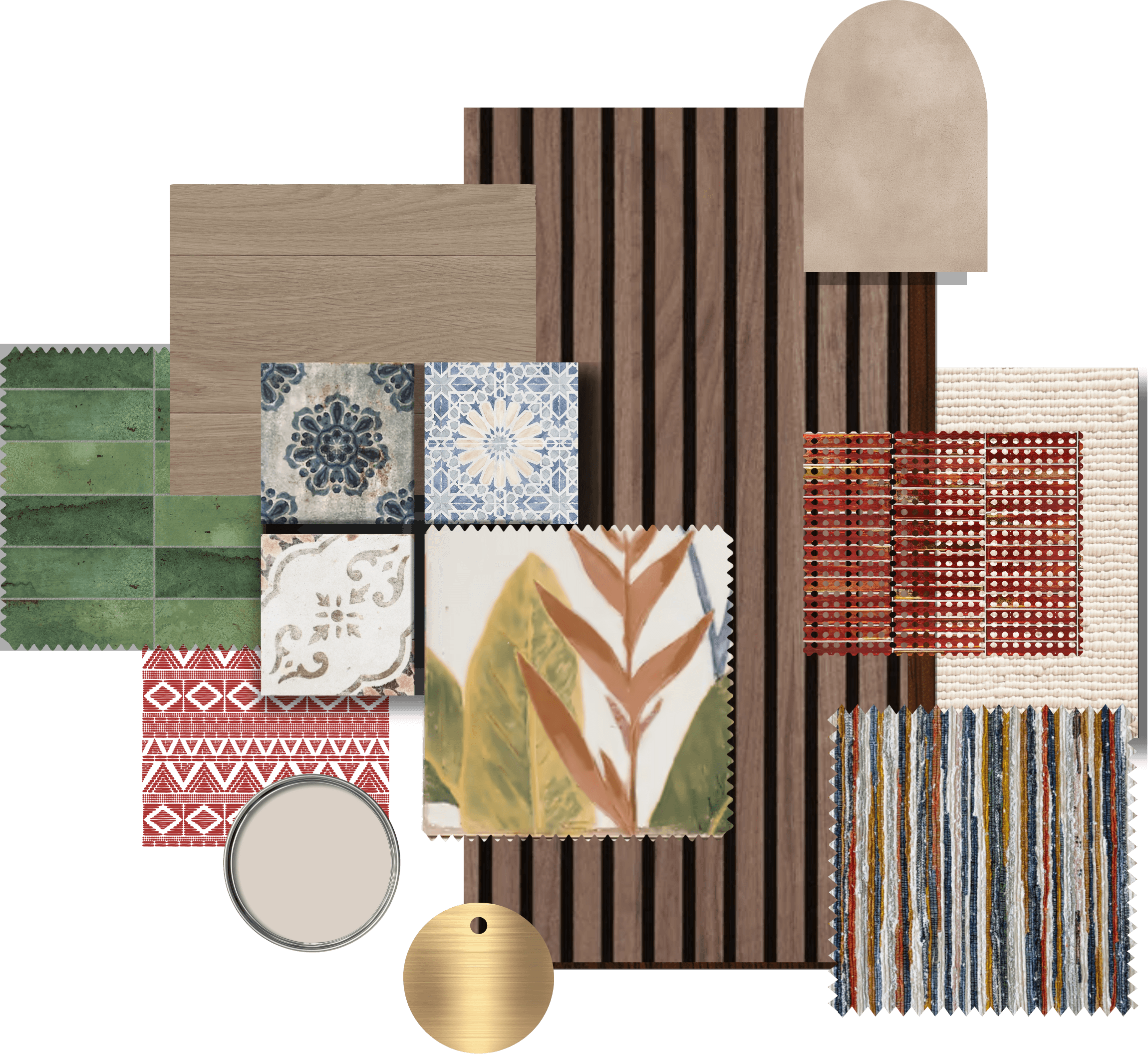
The Atlas of Flavors is a restaurant interior concept that reflects migration, identity, and cultural convergence through color, texture, and material contrast. The design is grounded in ADA-informed planning, integrating accessible pathways, flexible seating, and inclusive dining experiences to ensure the space is both expressive and functional.
material board
Floor Plan
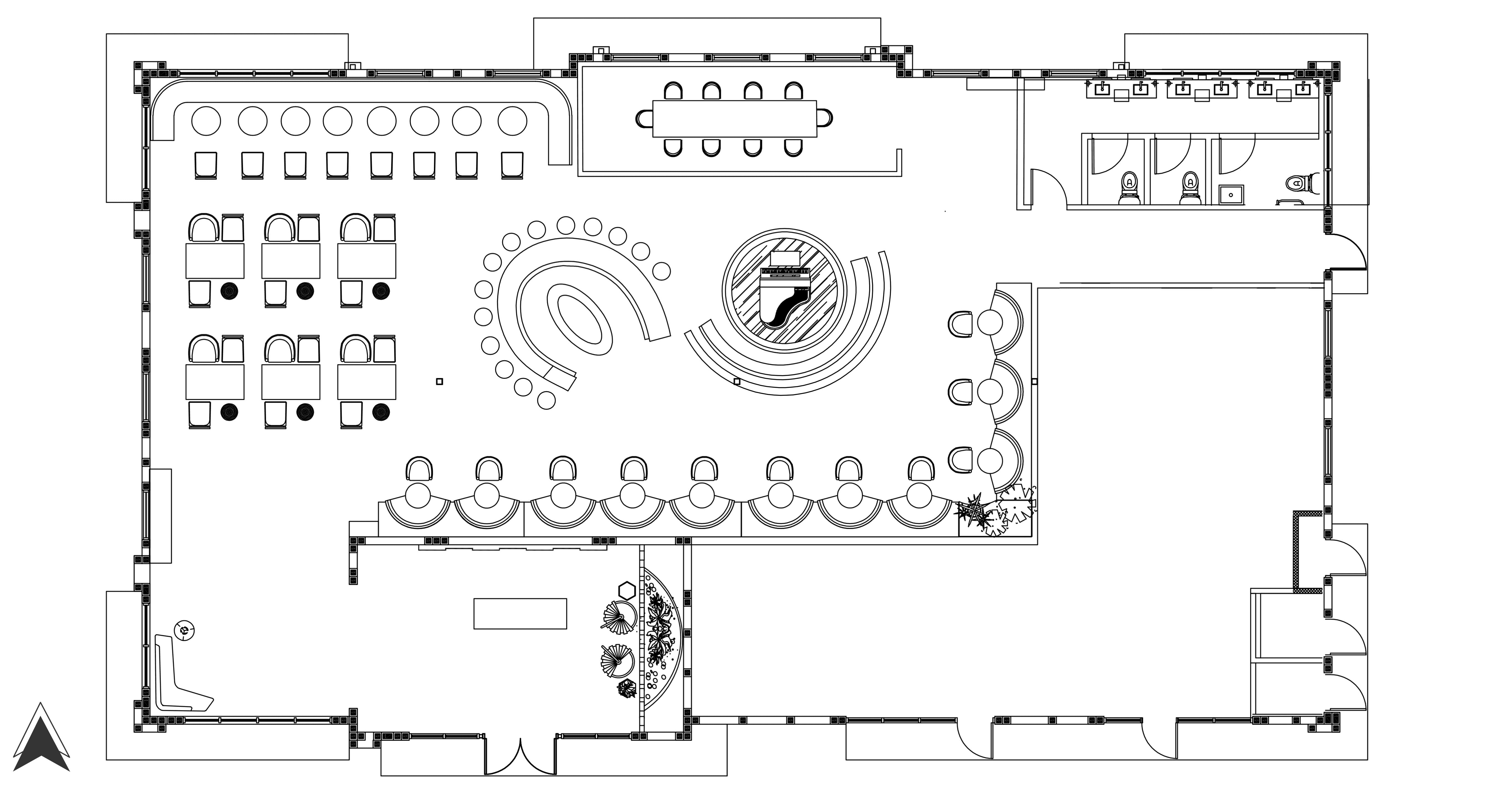
The floor plan organizes the restaurant into a clear sequence of entry, waiting, casual dining, bar lounge, formal dining, private dining, and back-of-house functions. Curved seating arrangements and layered dining zones support different levels of interaction, while the central bar becomes a focal point that anchors circulation and social activity. ADA accessibility is integrated through clear pathways, accessible restroom provisions, and a layout that supports comfort, movement, and inclusivity across the dining experience
Reflected Ceiling Plan
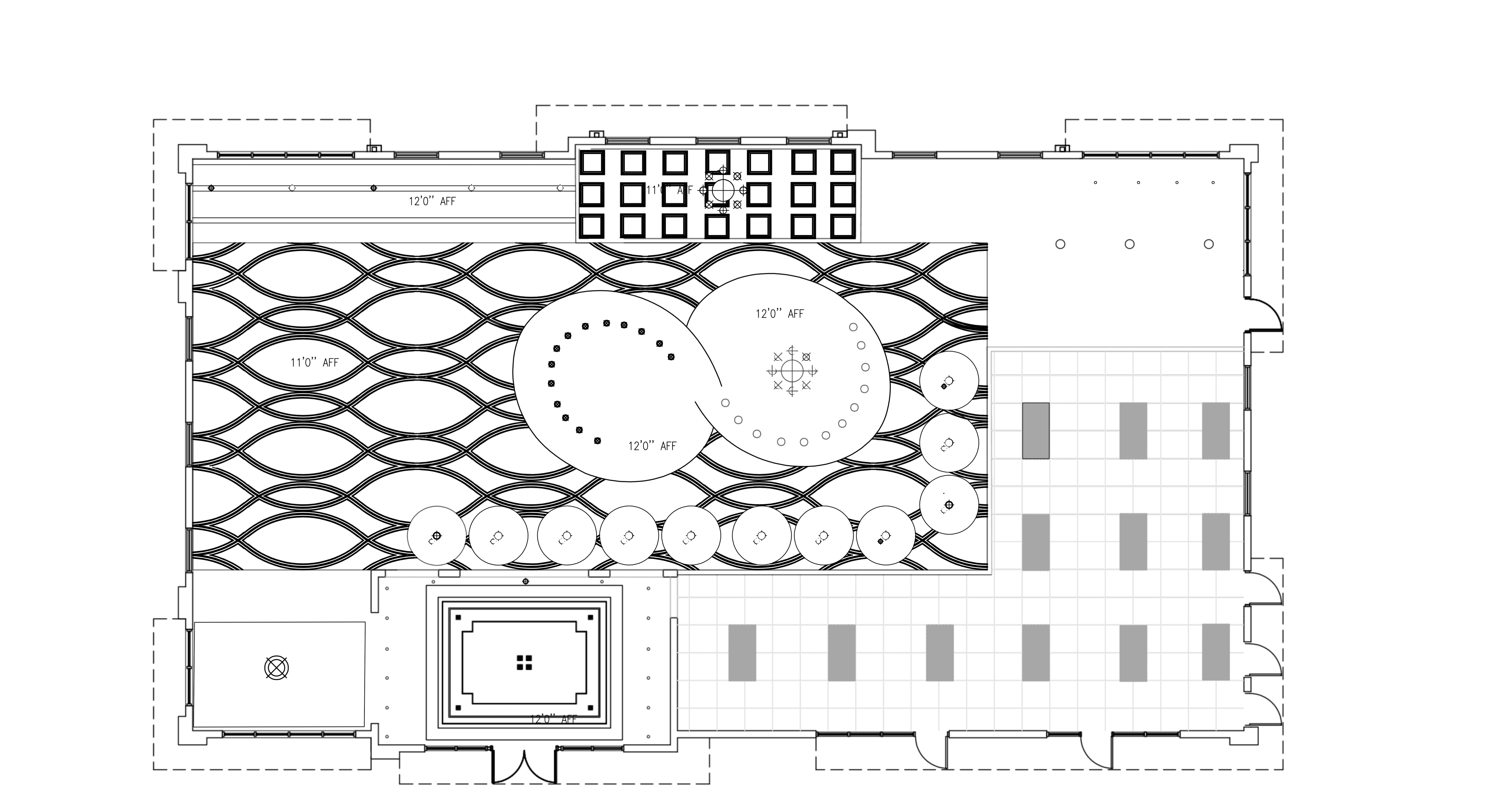
The ceiling design translates the project concept into an overhead gesture of flow and rhythm. Layered forms, height variation, and integrated lighting define different dining experiences while strengthening spatial identity and atmosphere.
Dining Area
The main dining area combines the warmth and restraint of Scandinavian wood detailing with the rich color language of Ethiopian culture, translating Marcus Samuelsson’s background into a layered hospitality experience. The table textiles further reinforce this narrative, featuring a 100% sustainable Ethiopian brand handcrafted by women artisans, adding cultural authenticity, material depth, and a stronger connection to craft and community.

Booth Seating
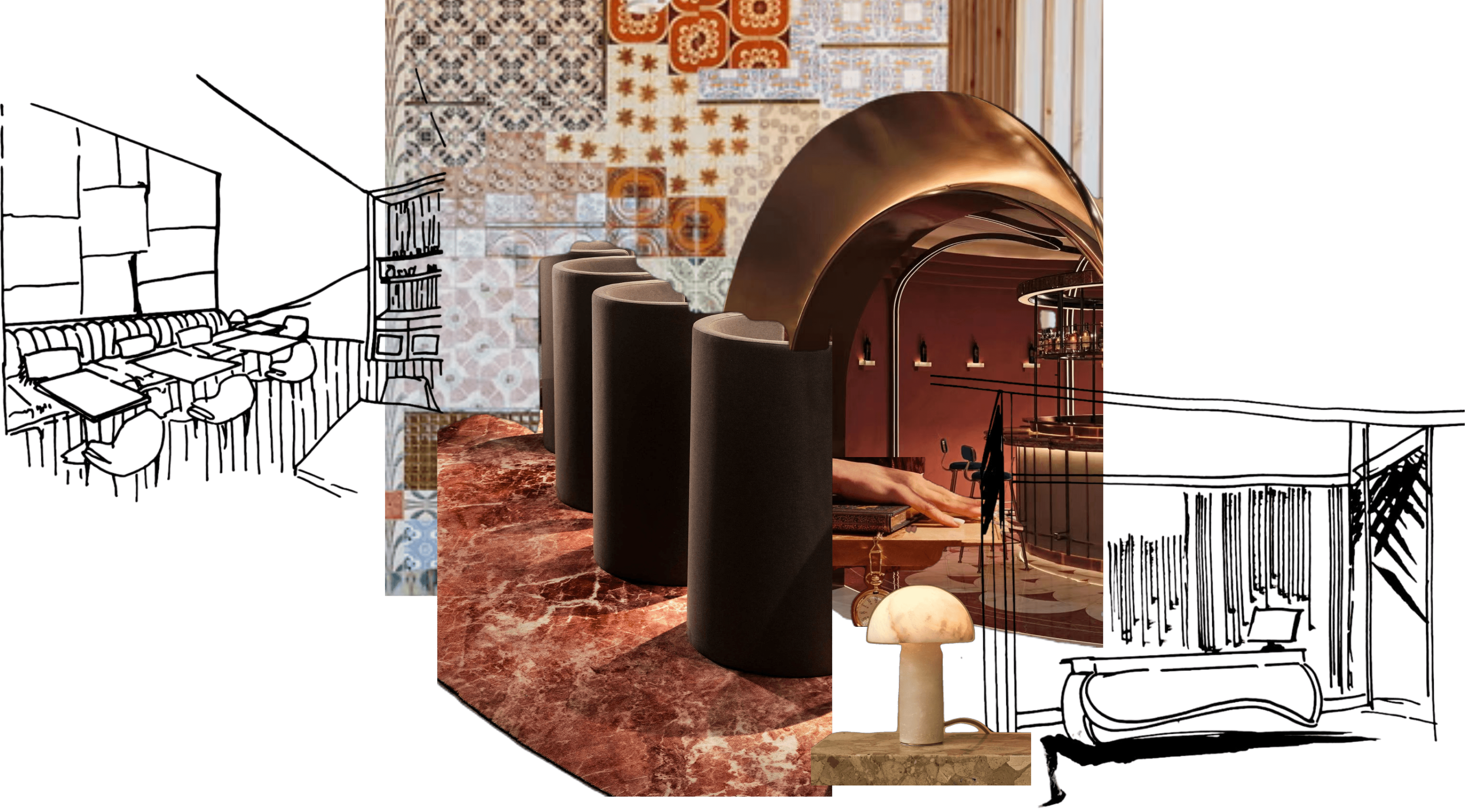
The booth seating creates a more intimate dining atmosphere while continuing the project’s material dialogue between Nordic wood tones and the saturated, expressive character of Ethiopian-inspired color and pattern. A mosaic feature wall becomes the visual anchor of the space, adding texture, craft, and cultural richness, while warm integrated lighting and enclosed seating enhance comfort and a sense of hospitality.


Mosaic Feature Wall
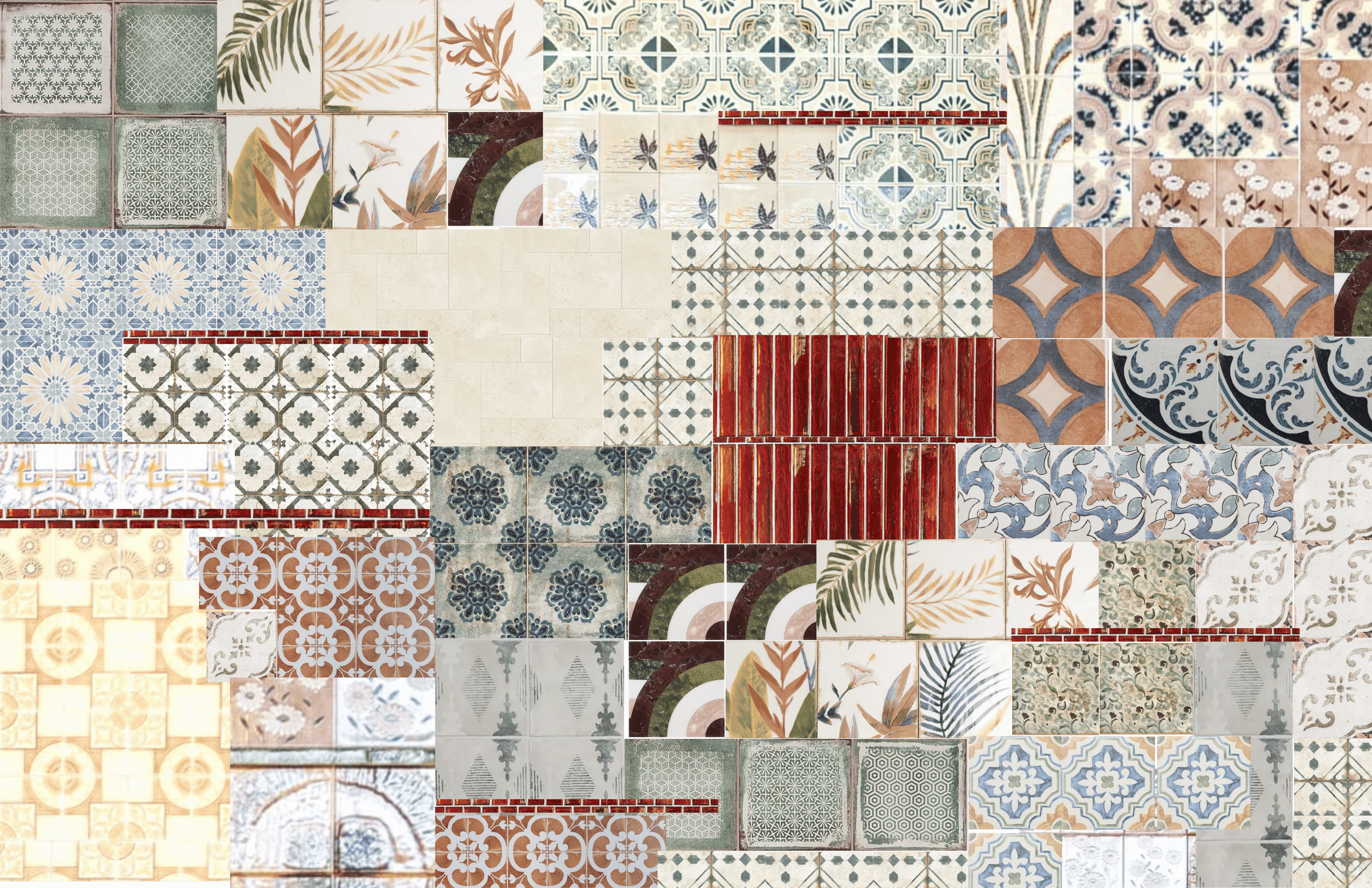
The mosaic feature wall expresses the project’s idea of cultural convergence through layered tile patterns, varied color tones, and handcrafted visual texture. It serves as a focal point within the dining space, adding depth, identity, and a sense of collected storytelling.
Bar
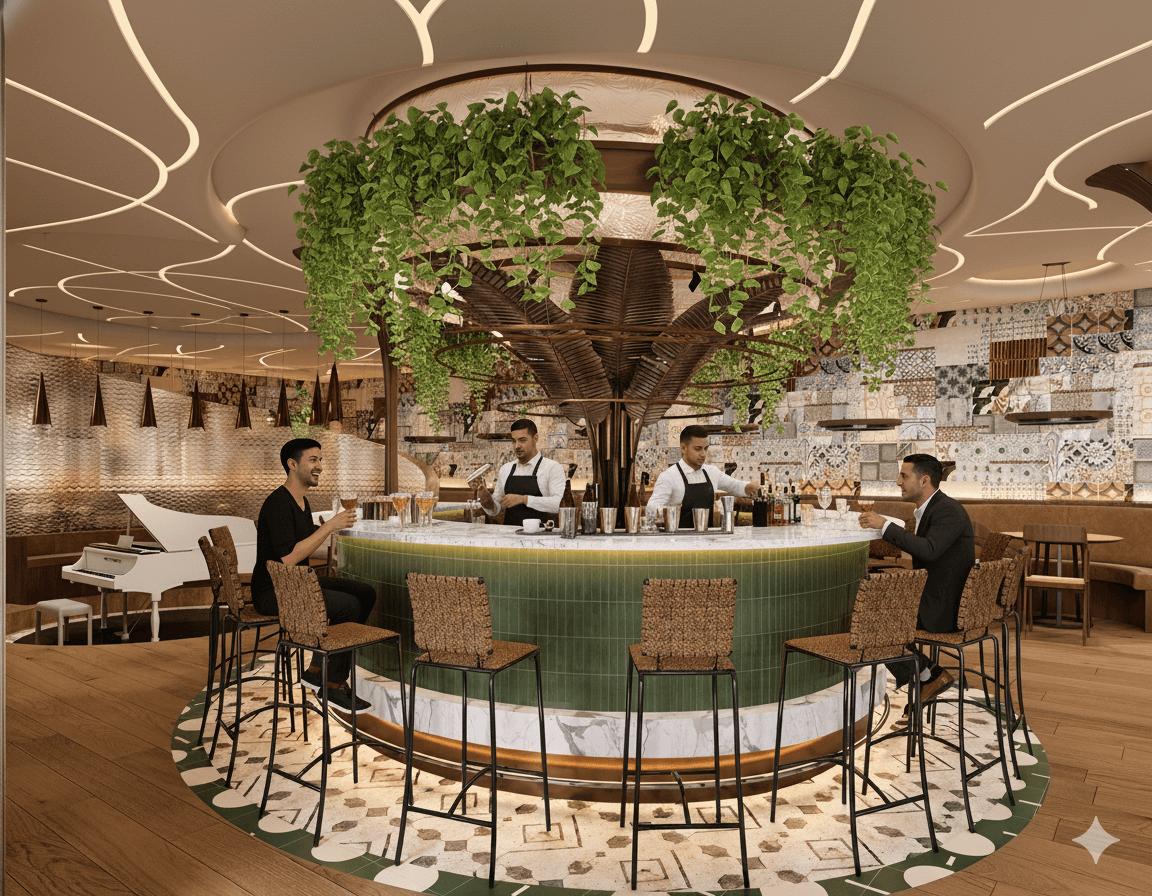
The bar serves as the social and visual centerpiece of the restaurant, expressing the project’s theme of cultural convergence through circular form and layered materiality. Warm wood, green tile, stone, and metallic accents create a rich hospitality moment, while the sculptural canopy above strengthens its presence as a gathering space.
Private Dining
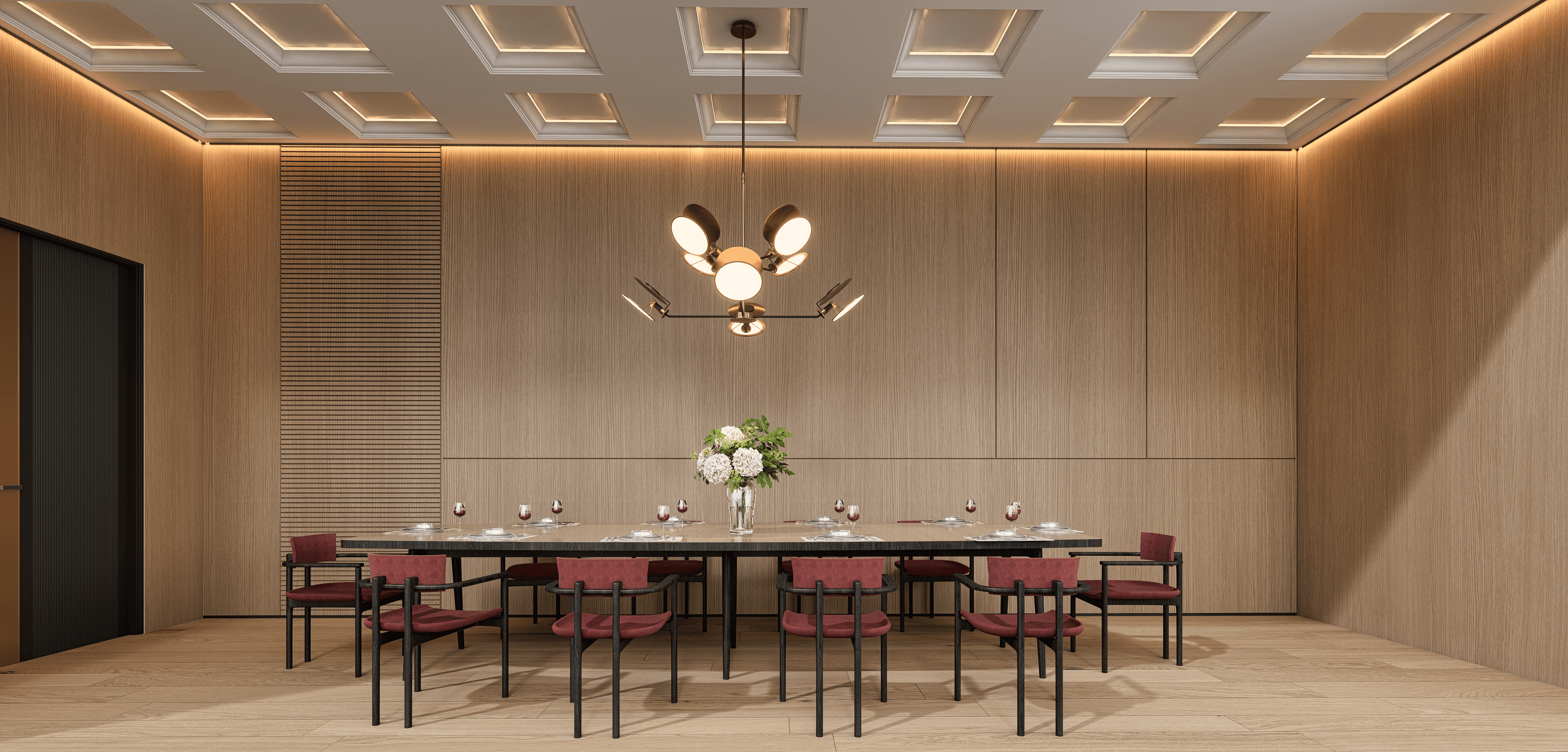
The private dining room offers a quieter and more intimate hospitality experience within the restaurant. Warm wood finishes, soft integrated lighting, and a refined ceiling composition create a calm, elegant setting for gathering, conversation, and special occasions.
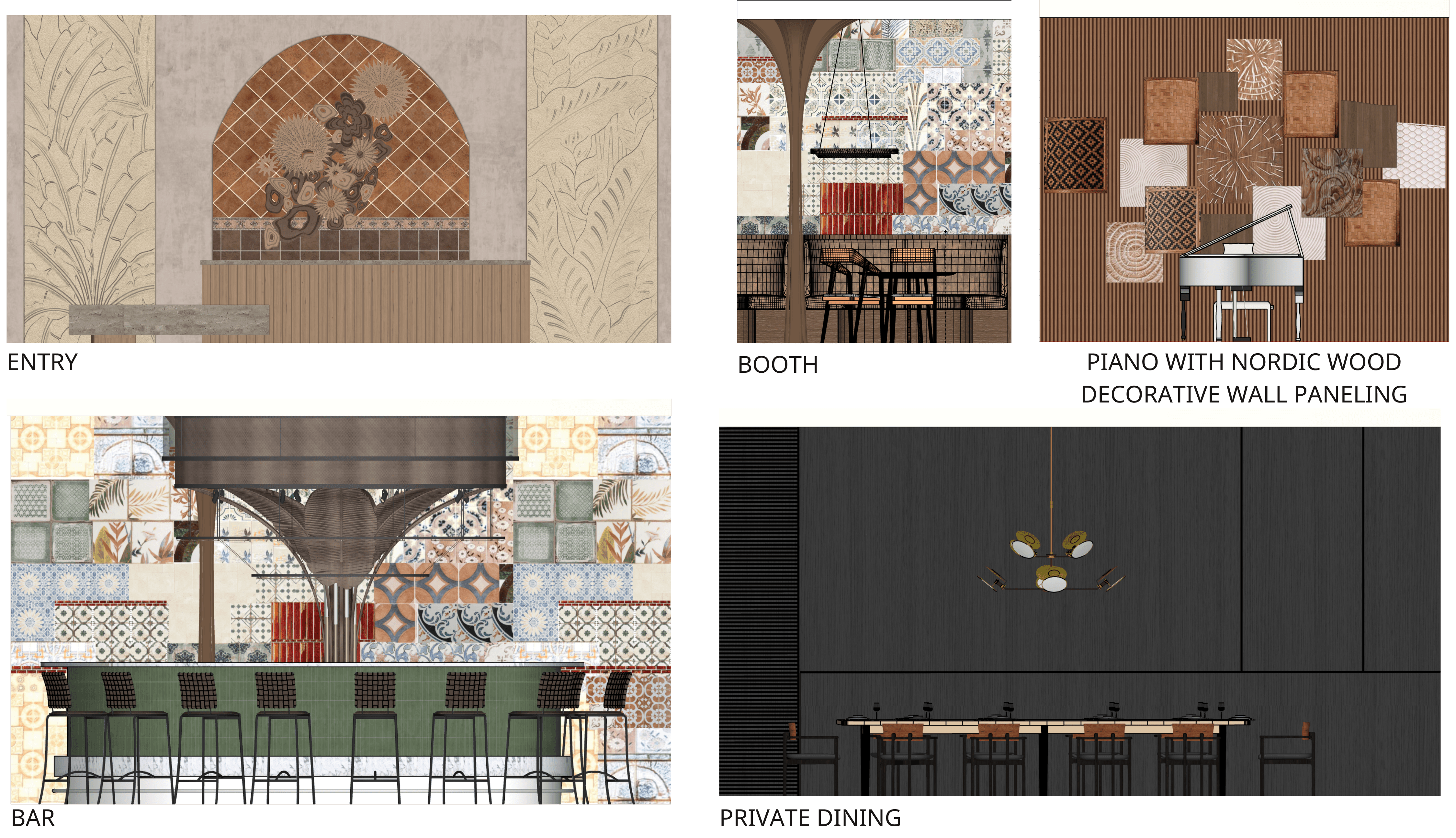
MORE ELEVATION DETAILS
Reflection
This project taught me that a strong concept is only effective when it is supported by function, accessibility, and clear spatial planning. Revisiting the layout, ADA details, and material choices helped me turn the design into a more intentional and resolved restaurant experience.
Key takeaways:
Research should guide every major design decision
Accessibility needs to be considered from the beginning
Material and lighting choices should support both story and function
Clear organization and communication improve the design process
Hospitality Design
Atlas of Flavors :A restaurant interior for Marcus Samuelsson
A hospitality interior concept translating migration, cultural memory, and belonging into a cohesive dining experience through spatial sequencing, material expression, and atmospheric design.
LOCATION :
5000 Jack Brack Road, Saint Cloud, FL 34771
SIZE :
5000 Sq.Ft.
Client :
Marcus Samuelsson
Project Duration :
10 weeks
CONCEPT : The Atlas of Flavors
The Atlas of Flavors is a restaurant interior concept that reflects migration, identity, and cultural convergence through color, texture, and material contrast. The design is grounded in ADA-informed planning, integrating accessible pathways, flexible seating, and inclusive dining experiences to ensure the space is both expressive and functional.
material board
Floor Plan
The floor plan organizes the restaurant into a clear sequence of entry, waiting, casual dining, bar lounge, formal dining, private dining, and back-of-house functions. Curved seating arrangements and layered dining zones support different levels of interaction, while the central bar becomes a focal point that anchors circulation and social activity. ADA accessibility is integrated through clear pathways, accessible restroom provisions, and a layout that supports comfort, movement, and inclusivity across the dining experience
Reflected Ceiling Plan
The ceiling design translates the project concept into an overhead gesture of flow and rhythm. Layered forms, height variation, and integrated lighting define different dining experiences while strengthening spatial identity and atmosphere.
Dining Area
The main dining area combines the warmth and restraint of Scandinavian wood detailing with the rich color language of Ethiopian culture, translating Marcus Samuelsson’s background into a layered hospitality experience. The table textiles further reinforce this narrative, featuring a 100% sustainable Ethiopian brand handcrafted by women artisans, adding cultural authenticity, material depth, and a stronger connection to craft and community.
Booth Seating
The booth seating creates a more intimate dining atmosphere while continuing the project’s material dialogue between Nordic wood tones and the saturated, expressive character of Ethiopian-inspired color and pattern. A mosaic feature wall becomes the visual anchor of the space, adding texture, craft, and cultural richness, while warm integrated lighting and enclosed seating enhance comfort and a sense of hospitality.
Mosaic Feature Wall
The mosaic feature wall expresses the project’s idea of cultural convergence through layered tile patterns, varied color tones, and handcrafted visual texture. It serves as a focal point within the dining space, adding depth, identity, and a sense of collected storytelling.
Bar
The bar serves as the social and visual centerpiece of the restaurant, expressing the project’s theme of cultural convergence through circular form and layered materiality. Warm wood, green tile, stone, and metallic accents create a rich hospitality moment, while the sculptural canopy above strengthens its presence as a gathering space.
Private Dining
The private dining room offers a quieter and more intimate hospitality experience within the restaurant. Warm wood finishes, soft integrated lighting, and a refined ceiling composition create a calm, elegant setting for gathering, conversation, and special occasions.
MORE ELEVATION DETAILS
Reflection
This project taught me that a strong concept is only effective when it is supported by function, accessibility, and clear spatial planning. Revisiting the layout, ADA details, and material choices helped me turn the design into a more intentional and resolved restaurant experience.
Key takeaways:
Research should guide every major design decision
Accessibility needs to be considered from the beginning
Material and lighting choices should support both story and function
Clear organization and communication improve the design process
Hospitality Design
Atlas of Flavors :A restaurant interior for Marcus Samuelsson
A hospitality interior concept translating migration, cultural memory, and belonging into a cohesive dining experience through spatial sequencing, material expression, and atmospheric design.
LOCATION :
5000 Jack Brack Road, Saint Cloud, FL 34771
SIZE :
5000 Sq.Ft.
Client :
Marcus Samuelsson
Project Duration :
10 weeks
CONCEPT : The Atlas of Flavors
The Atlas of Flavors is a restaurant interior concept that reflects migration, identity, and cultural convergence through color, texture, and material contrast. The design is grounded in ADA-informed planning, integrating accessible pathways, flexible seating, and inclusive dining experiences to ensure the space is both expressive and functional.
material board
Floor Plan
The floor plan organizes the restaurant into a clear sequence of entry, waiting, casual dining, bar lounge, formal dining, private dining, and back-of-house functions. Curved seating arrangements and layered dining zones support different levels of interaction, while the central bar becomes a focal point that anchors circulation and social activity. ADA accessibility is integrated through clear pathways, accessible restroom provisions, and a layout that supports comfort, movement, and inclusivity across the dining experience
Reflected Ceiling Plan
The ceiling design translates the project concept into an overhead gesture of flow and rhythm. Layered forms, height variation, and integrated lighting define different dining experiences while strengthening spatial identity and atmosphere.
Dining Area
The main dining area combines the warmth and restraint of Scandinavian wood detailing with the rich color language of Ethiopian culture, translating Marcus Samuelsson’s background into a layered hospitality experience. The table textiles further reinforce this narrative, featuring a 100% sustainable Ethiopian brand handcrafted by women artisans, adding cultural authenticity, material depth, and a stronger connection to craft and community.
Booth Seating
The booth seating creates a more intimate dining atmosphere while continuing the project’s material dialogue between Nordic wood tones and the saturated, expressive character of Ethiopian-inspired color and pattern. A mosaic feature wall becomes the visual anchor of the space, adding texture, craft, and cultural richness, while warm integrated lighting and enclosed seating enhance comfort and a sense of hospitality.
Mosaic Feature Wall
The mosaic feature wall expresses the project’s idea of cultural convergence through layered tile patterns, varied color tones, and handcrafted visual texture. It serves as a focal point within the dining space, adding depth, identity, and a sense of collected storytelling.
Bar
The bar serves as the social and visual centerpiece of the restaurant, expressing the project’s theme of cultural convergence through circular form and layered materiality. Warm wood, green tile, stone, and metallic accents create a rich hospitality moment, while the sculptural canopy above strengthens its presence as a gathering space.
Private Dining
The private dining room offers a quieter and more intimate hospitality experience within the restaurant. Warm wood finishes, soft integrated lighting, and a refined ceiling composition create a calm, elegant setting for gathering, conversation, and special occasions.
MORE ELEVATION DETAILS
Reflection
This project taught me that a strong concept is only effective when it is supported by function, accessibility, and clear spatial planning. Revisiting the layout, ADA details, and material choices helped me turn the design into a more intentional and resolved restaurant experience.
Key takeaways:
Research should guide every major design decision
Accessibility needs to be considered from the beginning
Material and lighting choices should support both story and function
Clear organization and communication improve the design process